
COMMERCIAL GUIDE
Before You Approve a Commercial Carpentry Proposal: Clarify What’s Included and Who Handles What
Two proposals may reference the same project and still price different work. Resolve differences in documents, materials, fabrication, installation and interfaces before treating the totals as comparable.
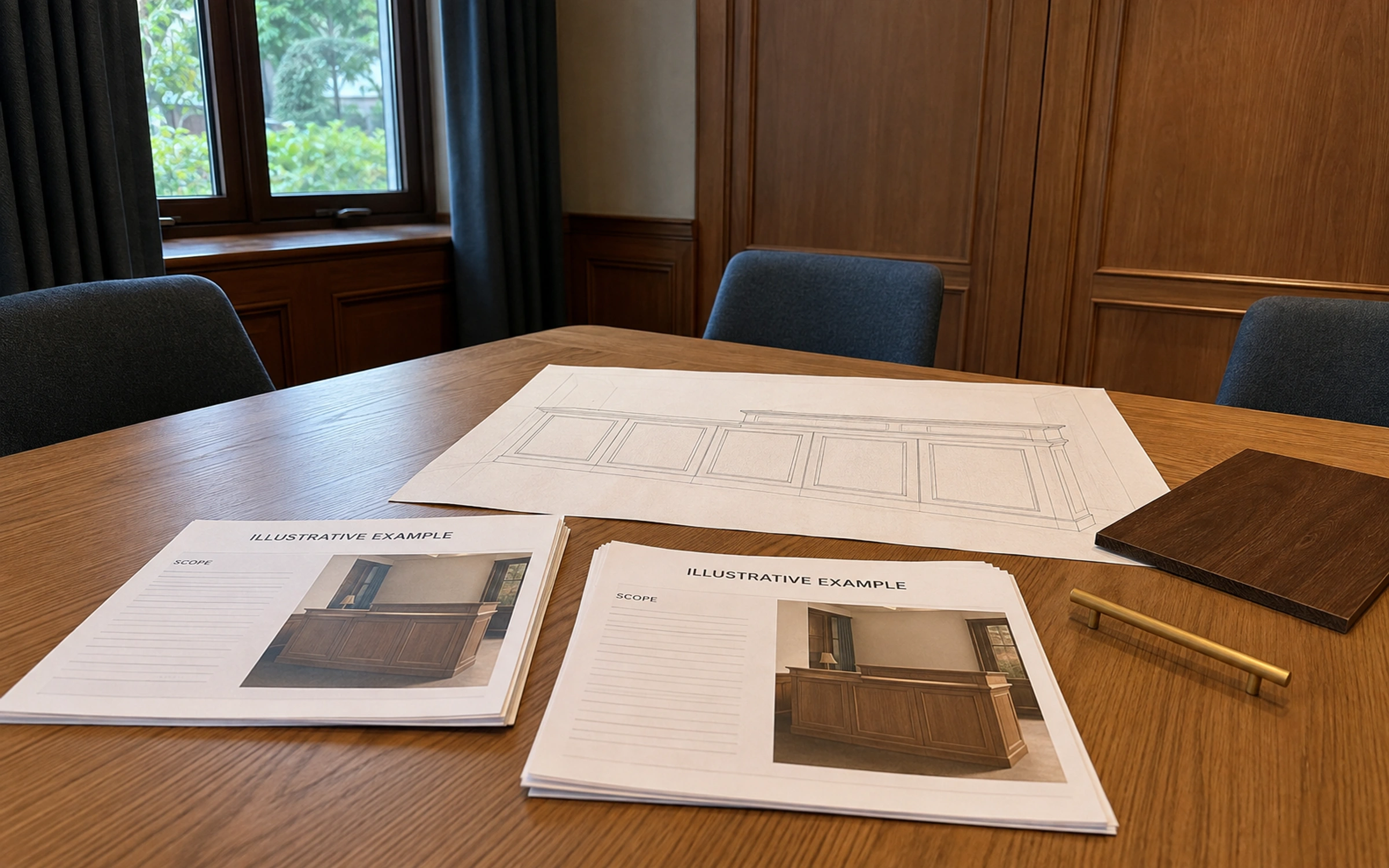
A practical answer
Use the same document set and scope breakdown for each proposal. Record whether each item is included, excluded, assigned to another party or awaiting clarification. Then resolve those differences with the designated project contacts before approval.
Establish one document basis for the comparison
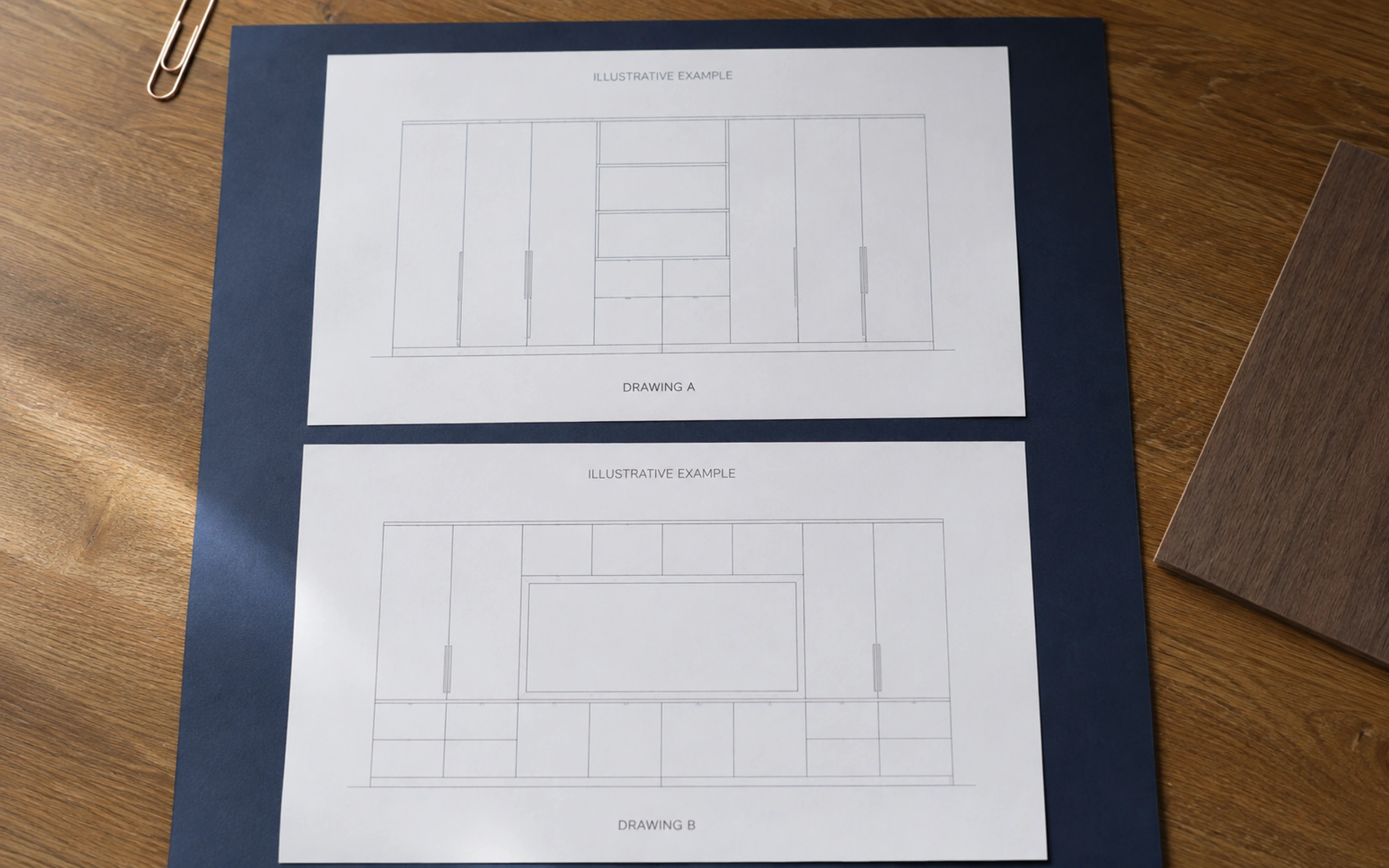
Identify the drawings, revisions, schedules and addenda used by each bidder. A proposal based on an earlier elevation or a different hardware schedule may not represent the current requirement.
Keep a short record of the document title, revision or date, affected location and open question. If information changes during pricing, ask how the change is reflected in the proposal rather than assuming that every team received or included it.
Compare responsibilities as well as quantities
Use the following headings to review the proposals side by side. This is a planning checklist, not a completed bid comparison or a contractual allocation of responsibility.
| Scope item | Record for each proposal | Clarify before approval |
|---|---|---|
| Materials and products | Specified products, alternatives and allowances. | Who supplies each item and who approves substitutions? |
| Fabrication | Included, excluded or provided by another party. | Are the required production details and approvals assigned? |
| Installation | Included locations, quantities and component limits. | What field fitting, fillers, supports or related work is included? |
| Field dimensions | Assigned party and required verification stage. | What must be verified before affected components proceed? |
| Substrates and backing | Assumed condition and stated exceptions. | Who confirms readiness and handles corrective work? |
| Finishing and hardware | Supply, preparation, fitting and final finish responsibilities. | Which work is separate from the carpentry package? |
| Access and protection | Work windows, staging and occupied-area assumptions. | What constraints could change the proposed sequence or price? |
| Closeout | Required documentation and treatment of punch items. | How are original-scope corrections distinguished from added work? |
Make the difference visible before asking for a revised total
Consider an illustrative example: one proposal includes installing owner-supplied cabinets; another includes supplying and installing cabinets, but excludes the countertop and final finish. Those totals describe different responsibilities even if both are labeled “casework.” This is an example, not a Primo project or actual bid.
List the difference, identify the party who can resolve it and ask for a written clarification. A price adjustment is useful only when the corresponding scope change is understood. Do not circulate another bidder’s confidential documents without permission.
Keep design review, field verification and installation responsibilities distinct
A finish selection, a drawing review and verification of a field dimension answer different questions. Identify who has authority to make each decision, what information they need and which work depends on their response.
If project documents refer to AWI submittals, ask the designated contact which submissions apply and who provides them. AWI’s published standard is a reference for that conversation, not a claim that every carpentry package follows the same process.
Bring operating constraints into the comparison
If an office, store or shared area will remain active, record known access limits, delivery arrangements and work windows. Confirm which assumptions each proposal makes about available space and preceding work.
Avoid treating a target date as an agreed sequence. Materials, approvals, site readiness and other trades may affect the plan. Ask which dependencies remain open and how changes will be communicated.
Close the comparison with a clear decision record
An unresolved question is not always a reason to stop every discussion. It is a reason to avoid describing that part of the scope as settled. Keep the distinction clear so the project team knows what is ready and what still needs a decision.
- Confirm the current proposal and document references.
- Resolve or explicitly record exclusions, allowances and work by others.
- Identify the remaining decisions and their authorized contacts.
- Record how changes will be proposed and approved.
- Confirm the agreed access assumptions and closeout requirements.
YOUR NEXT STEP
Have a commercial carpentry package to review?
Tell Primo Carpentry LLC your project location, your role and the scope you need priced. Note the document stage and access constraints. Ask how to share authorized project documents before sending confidential files.
Ready to discuss the work?
Discuss your commercial scopeExplore commercial build-out carpentry