
Residential carpentry
Kitchen Pantry Storage: Shelves or Pull-Outs?
Kitchen Pantry Storage works best when it fits what you keep and how you reach it. Before choosing tall cabinets, open shelves or pull-outs, look at the items that disappear at the back and the things you use every day. We put those everyday frustrations at the center of the planning conversation.
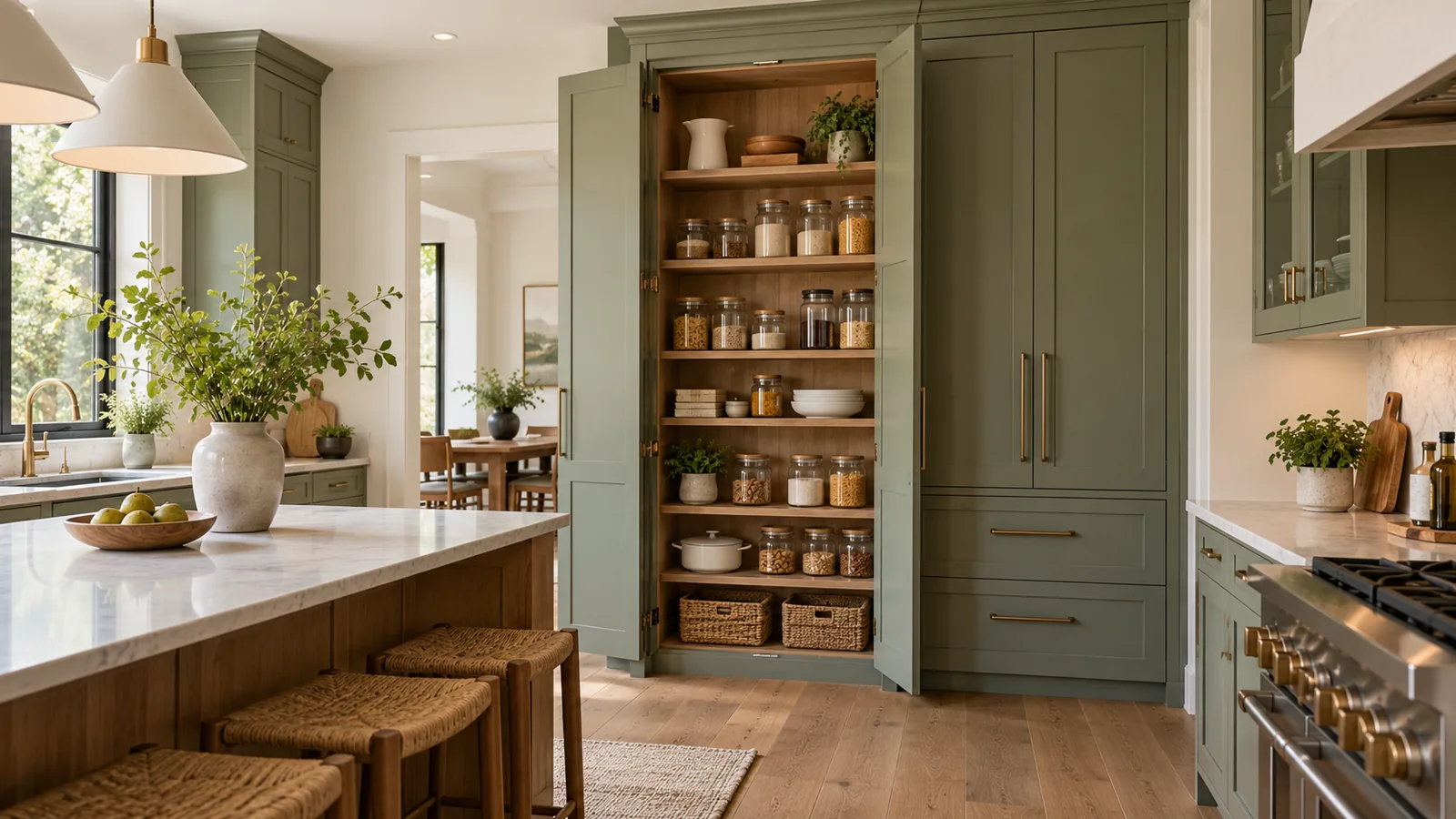
Which pantry storage approach fits your kitchen?
Start with the contents and the existing space. Shelves can suit visible, straightforward storage; enclosed cabinets keep contents out of view; pull-outs can bring stored items forward. The useful choice is the one you can reach, see and operate comfortably with your actual items inside.
Pantry storage options solve different problems
Pantry storage options should be compared by access and use, not just how much fits in an empty cabinet. A deep space is not automatically useful if the items at the back are difficult for you to retrieve.
| Approach | Useful when | Check before choosing |
|---|---|---|
| Open or fitted shelves | You want contents visible and can reach the proposed positions | Item depth, shelf support, cleaning and what remains on display |
| Enclosed cabinet with shelves | You prefer a quieter appearance and grouped storage | Visibility at the back, door operation and comfortable reach |
| Cabinet with internal pull-outs | Bringing items toward you addresses an access problem | Compatible hardware, usable interior, operation and product load limits |
These are not mutually exclusive. You might prefer a visible shelf for frequently used mugs and enclosed storage for bulk groceries. Choose each part for a reason rather than repeating one solution throughout the kitchen.
For a manufacturer example, Blum's SPACE TOWER uses individual full-extension drawers to make contents visible from above and accessible from the sides. That explains one access strategy; it does not mean every existing cabinet can accept that system or that all pull-outs perform alike.
Build an inventory around daily use
Take a representative group of items out of your current pantry. Separate everyday food, occasional cookware, small appliances and bulk supplies. Include the things that never seem to have a home, such as baking sheets or serving pieces.
For each group, answer three questions: how often do you use it, where do you use it and what makes it awkward to retrieve? Photograph the group with the largest item visible. That gives a planning conversation more substance than “we need more storage.”
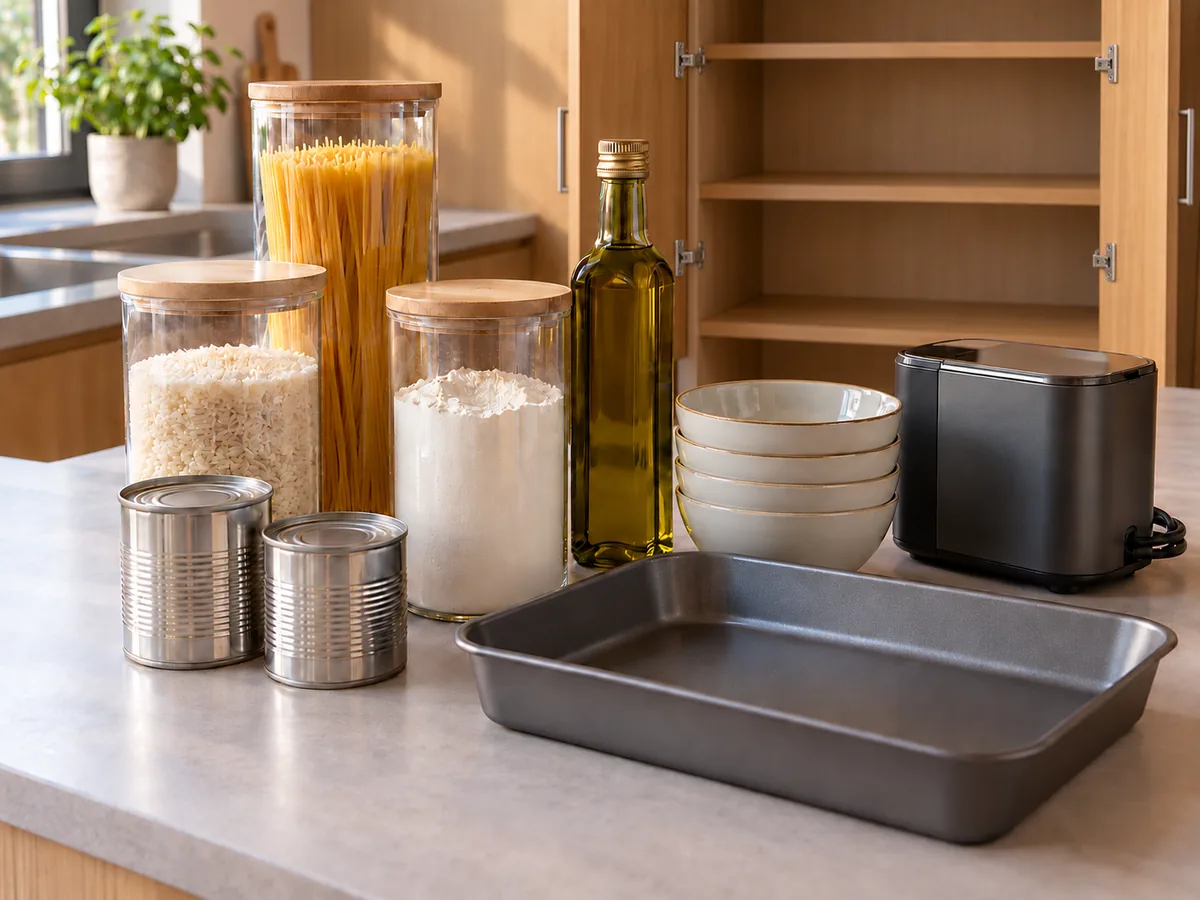
Consider this example: if breakfast supplies are used every morning but serving platters only occasionally, they do not need the same access priority. The goal is not a perfect display. It is a place that works when the kitchen is busy.
Pantry cabinet access matters more than empty capacity
Pantry cabinet access depends on the people using it as well as the hardware. Think through opening the door, reaching the item, lifting it out and closing the cabinet while someone else is nearby.
Try a display or sample mechanism when possible. Use the type of container you actually store rather than judging an empty drawer. Tell the designer or installer about reach or movement needs so they can be considered in the configuration. A feature that feels convenient for one person may not solve another person's problem.
For an existing cabinet, ask for a compatibility review before purchasing inserts. Interior dimensions, door movement and the selected hardware all matter. Avoid ordering by the outside width alone.
Bring a storage brief, not just an inspiration image
A useful pantry brief contains:
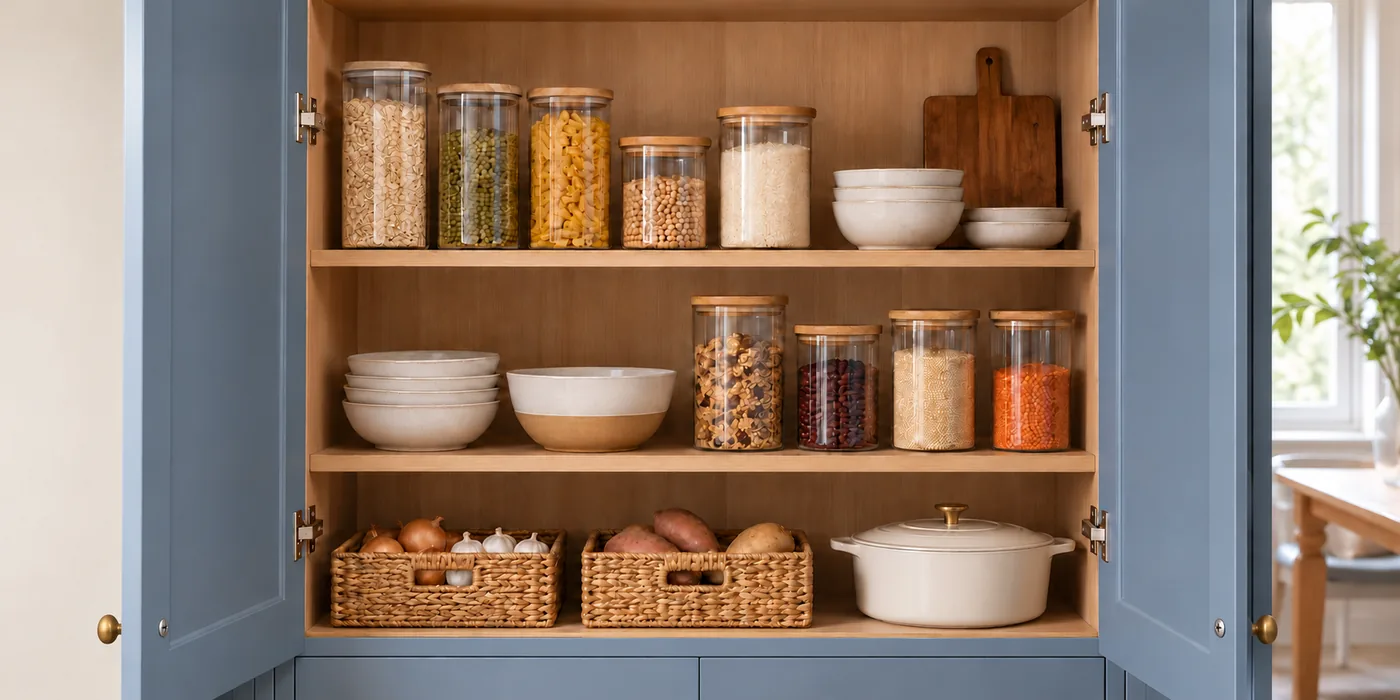
- The items you want to store, including the largest and most awkward.
- What currently becomes hidden, crowded or difficult to reach.
- Photographs with the existing doors open and closed.
- Your preference for visible versus concealed contents.
- Anything you want to keep, including usable cabinets or shelving.
- The town and the part of the kitchen being considered.
If you are still deciding whether the solution should be fitted into the room at all, start with our guide to built-in storage versus freestanding furniture. That broader choice comes before specifying pantry components.
Common pantry questions
Are pull-outs always better than shelves?
No. They address particular access problems but introduce hardware and space requirements. Compare how each option works with your contents and the people using the pantry.
Can I improve storage without replacing every cabinet?
Possibly. Start by reviewing the existing cabinet condition, dimensions and operation. Compatible organizers or a targeted change may meet the need; the review determines what is practical.
Should a small appliance live inside the pantry?
Distinguish storing an appliance from operating it there. Its manufacturer instructions and any electrical or ventilation requirements need separate consideration. A storage location is not automatically a suitable operating location.
Plan storage around your household
Describe the items that are hard to store and share photographs of the space you want to improve. At Primo Carpentry LLC, we can discuss the kitchen woodwork involved and help clarify what needs review before you choose components.